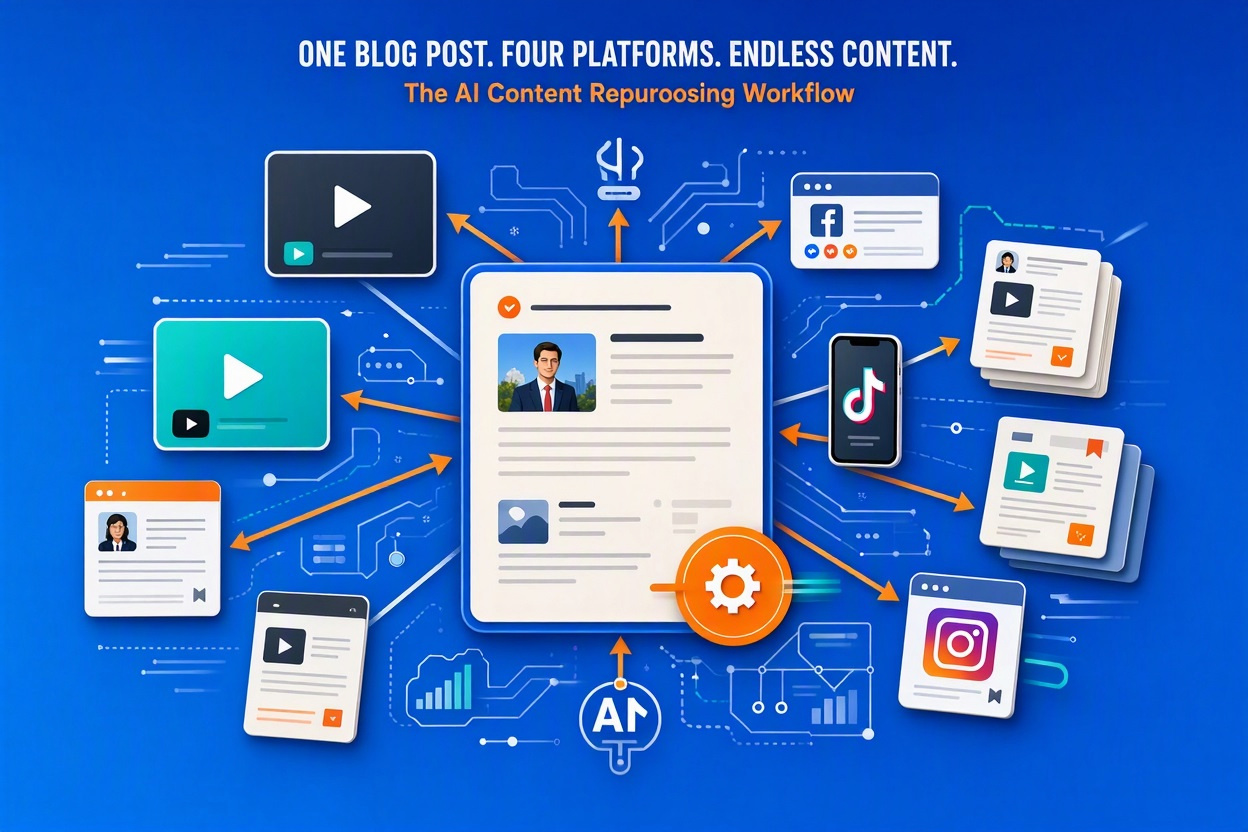
A practical content repurposing system that helps bloggers, affiliate marketers, and content creators reach more people without constantly creating new content from scratch.
Introduction
One of the biggest mistakes content creators make is publishing content once and moving on.
You spend hours researching, writing, editing, and publishing a great piece of content. Then you share it once and start over with the next idea.
That’s not an efficient use of your time.
The creators growing the fastest aren’t necessarily creating more content. They’re getting more mileage from every piece of content they create.
A single blog post can become:
- A YouTube video
- Multiple YouTube Shorts
- Facebook posts
- Instagram Reels
- TikTok videos
- LinkedIn posts
- Email newsletters
- Lead magnets
In this guide, I’ll show you how to repurpose content across major platforms using a content multiplication strategy.
Why Content Repurposing Matters
Every platform has a different audience.
Some people enjoy reading articles.
Others prefer watching videos.
Some only consume short-form content.
When you repurpose content, you increase your chances of reaching people wherever they prefer to consume information.
Content repurposing can help you:
✅ Reach a larger audience
✅ Increase traffic
✅ Build authority
✅ Grow your email list
✅ Generate more affiliate clicks
✅ Save time
The goal is not to create more work.
The goal is to create more value from the work you’ve already done.
Start With One Core Piece of Content
Everything starts with a source asset.
Examples include:
- A pillar article
- A product review
- A case study
- A tutorial
For example, if I publish an article like:
How to Turn One Blog Post Into 50+ Content Assets Using AI
that article becomes the foundation for everything else.
Rather than creating platform-specific content from scratch, I repurpose the original content into multiple formats.
Step 1: Turn the Blog Post Into a YouTube Video
Long-form content is usually the easiest format to create from a blog post.
The article already contains:
- Structure
- Headings
- Talking points
- Examples
You simply convert it into video format.
Tools I Recommend
Pictory can transform blog posts into videos, making it one of the easiest tools for content repurposing.
Synthesia is ideal if you want an AI presenter delivering your content.
InVideo AI helps rapidly generate videos from written prompts and articles.
Step 2: Create YouTube Shorts
Once the long-form video is complete, identify the strongest moments.
Look for:
- Surprising facts
- Quick tips
- Key lessons
- Case study results
Each moment can become a separate YouTube Short.
One 10-minute video can easily generate:
- 3 Shorts
- 5 Shorts
- Sometimes 10 Shorts
Step 3: Repurpose for TikTok
TikTok rewards short, attention-grabbing content.
Instead of creating new content, use:
- YouTube Shorts
- Video snippets
- Key takeaways
Small edits may be required, but the core content remains the same.
Examples:
- Quick marketing tips
- Software demonstrations
- Blogging lessons
- Affiliate marketing strategies
Step 4: Repurpose for Facebook
Facebook supports multiple content formats:
Short Videos
Reuse Shorts and Reels.
Text Posts
Pull key sections directly from your article.
Images
Turn important quotes into graphics.
Links
Link back to the original article.
Facebook works especially well for sharing:
- Case studies
- Personal experiences
- Success stories
Step 5: Repurpose for Instagram
Instagram offers several options:
Reels
Repurpose short-form video content.
Carousel Posts
Convert article sections into slides.
Graphics
Use key tips and takeaways.
Stories
Share quick content highlights.
A single article can easily become multiple Instagram assets.
Step 6: Repurpose for LinkedIn
Although LinkedIn isn’t mentioned as often as YouTube or Instagram, it can be incredibly valuable.
Examples:
- Lessons learned
- Content creation workflows
- Marketing case studies
- Publishing experiences
LinkedIn audiences often respond well to practical, business-focused content.
Step 7: Create Email Content
Many creators overlook email marketing.
Every article contains material that can become:
- Weekly newsletters
- Broadcast emails
- Lead nurturing sequences
Simply summarize:
- The most important lesson
- Key takeaway
- Action step
Then link readers back to the original article.
Step 8: Create Lead Magnets
One article can often become a downloadable resource.
Examples:
- PDF guide
- Checklist
- Workbook
- Resource package
This creates another content asset while also helping grow your email list.
The Content Multiplier Method
If you’d like to see this concept in action, I’ve put together a free guide.
View The Content Multiplier Method
A Real Content Repurposing Example
Let’s use a real-world example.
I recently published:
How I Published Two AI Coloring Books on Amazon KDP in 48 Hours
That single article could become:
YouTube
- Full case study video
YouTube Shorts
- Publishing lesson #1
- Book creation lesson #2
- Biggest surprise #3
- Personal publishing experience
- Lessons learned
- Carousel post
- Reel
TikTok
- AI publishing story
- Case study newsletter
The article becomes the source asset.
Everything else expands from it.
My Content Repurposing Workflow
My typical process looks like this:
Plain Text
Blog Post
↓
YouTube Video
↓
YouTube Shorts
↓
TikTok Videos
↓
Instagram Reels
↓
Facebook Posts
↓
Email Newsletter
↓
Lead Magnet
One idea.
Multiple assets.
Multiple opportunities to reach your audience.
Final Thoughts
The future doesn’t belong to creators who simply create more content.
It belongs to creators who maximize the value of every piece of content they create.
Instead of publishing once and moving on, build a system for turning one piece of content into many different assets.
That’s how you increase visibility, save time, and grow consistently across multiple platforms.
Content creation is important.
Content multiplication is where the real leverage comes from.